

Tender Things Only Exist If We Agree to Do Them
Gratitude and grief for Minneapolis, state violence, walking each other home and the stubborn work of staying soft when it would be easier to go numb.

I actually wrote an essay on Monday about the Ralph Lauren show and all the practical ways I want guys to style and polish their looks right now. I’d planned to send it Tuesday.
But now it’s Sunday, at the end of a loooong week. On-boarding new clients. A three day school week for the kids. Normal freelance and styling load. The world on fire.
Turns out all of my best intentions cannot will more hours or less ache into the days.
Yesterday I was finishing that piece—images, links, all the fun stuff—when my news feed started pinging with more horror out of Minneapolis. And suddenly it felt insane to just… carry on.
Our nervous systems were not built to watch a murder carried out by the state and then immediately gather ourselves to help our kids out of their snow boots for the twelfth time, wrap them in blankets, pour hot chocolate into their favorite mugs, and sit back down to work like nothing happened.
The tension is insane. It should feel insane.
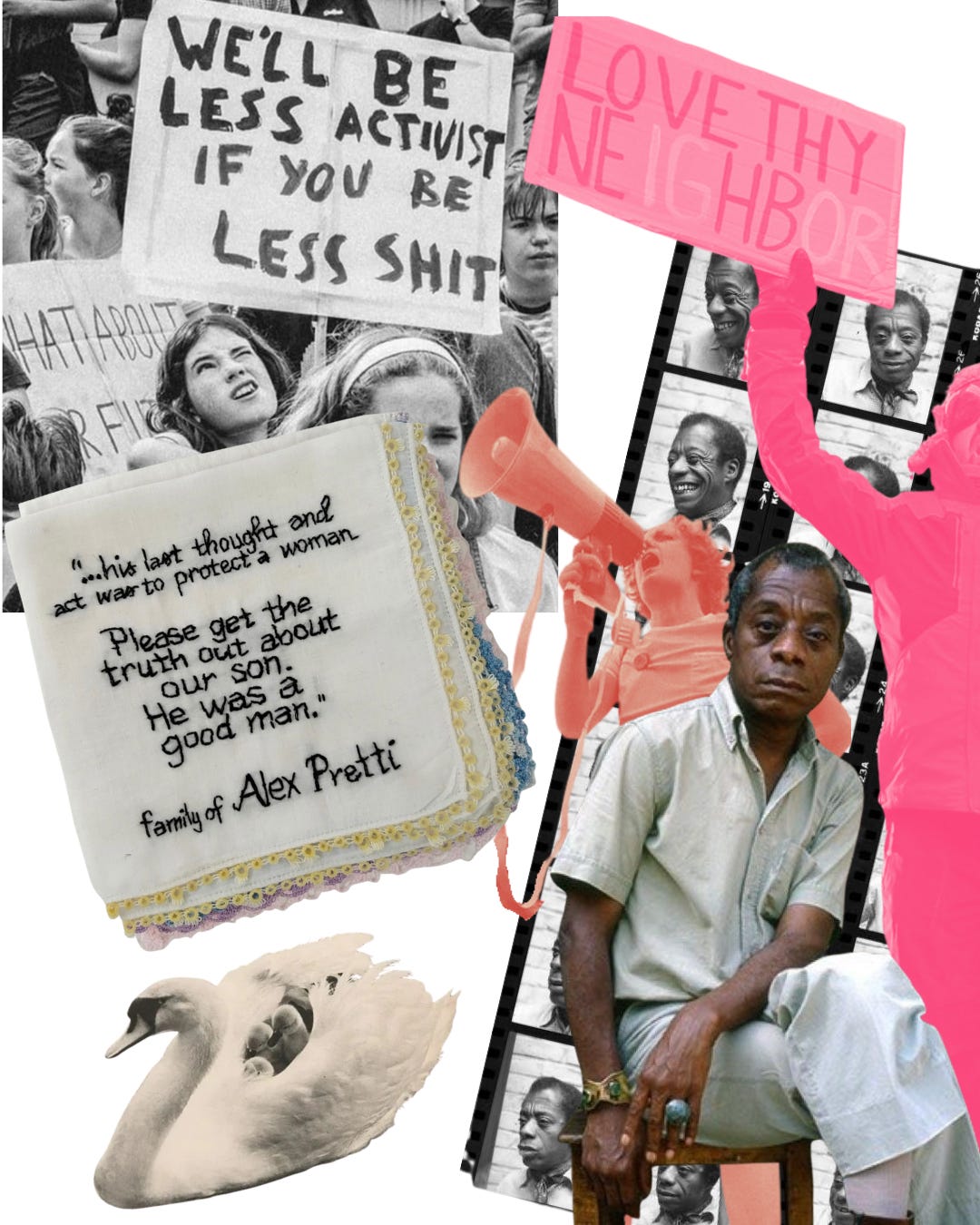
In our family we say this a lot: “We’re all just walking each other home.” It’s a Ram Dass quote, but it’s in our bones because we’ve stood at the edge of heartbreak with people we love and felt how holy that walk can be.
We’re watching our friends in Minneapolis do that now—walking people home in the middle of this nightmare. They’re holding the line not just for their neighbors but, I honestly believe, for an entire nation.
One friend is keeping a running list of notaries who will come to your house to sign immigration paperwork or guardianship plans for your kids in case you go missing. Another friend is out with his camera, photographing for a national outlet, literally putting his body in the middle of ice and protesters and tear gas so the rest of us can see what is happening.
Fifty thousand people marched in subzero temperatures—across the political gamut—to protest masked, secret police in their community. Another friend closed her sandwich shop that day along with hundreds of local businesses as part of the first general strike in America in eighty years.
They are holding more than feels possible.
I’m carrying grief and gratitude for them at the same time and I don’t know the word for that. So here’s my clumsy sincerity:
Thank you for walking us home, even when you feel broken, exhausted and at the end of yourself. We see you. We love you. It hurts. We’re so sorry. We’re so grateful.
Tender things still happen, but they only exist if we agree to do them. If we keep choosing them, on purpose, in the middle of all this.
In all our cycles—historically and also just in this one long January—of breaking and mending, undoing and trying again, hope met with heartache, one thing has always been true: there have always been dreamers, hopers, artists, lovers, truth-tellers, gentle souls, renegades and friends—people like you—who keep showing up.
They show up with love, with open hands, meeting what needs to be met, holding what needs to be held. They help other people breathe, rest, feel seen—even when the world feels white-hot with hurt.
Those people have been there through every hard, confusing time.
Renee Good was one of these people.
Alex Pretti was one of these people.
You’re part of that story too.
So please: keep being true. Keep showing up. Keep making your art. Keep laughing out loud. Keep bringing the thing that’s distinctly yours—a sandwich, a list, a protest sign, a photograph, the sex shop in Minneapolis providing mutual aid—even if no one asked for it, especially if no one asked for it. Most of us don’t know what we need until someone shows up with just enough light to make a way forward, enough clarity to help us take one more step and imagine a different way out.
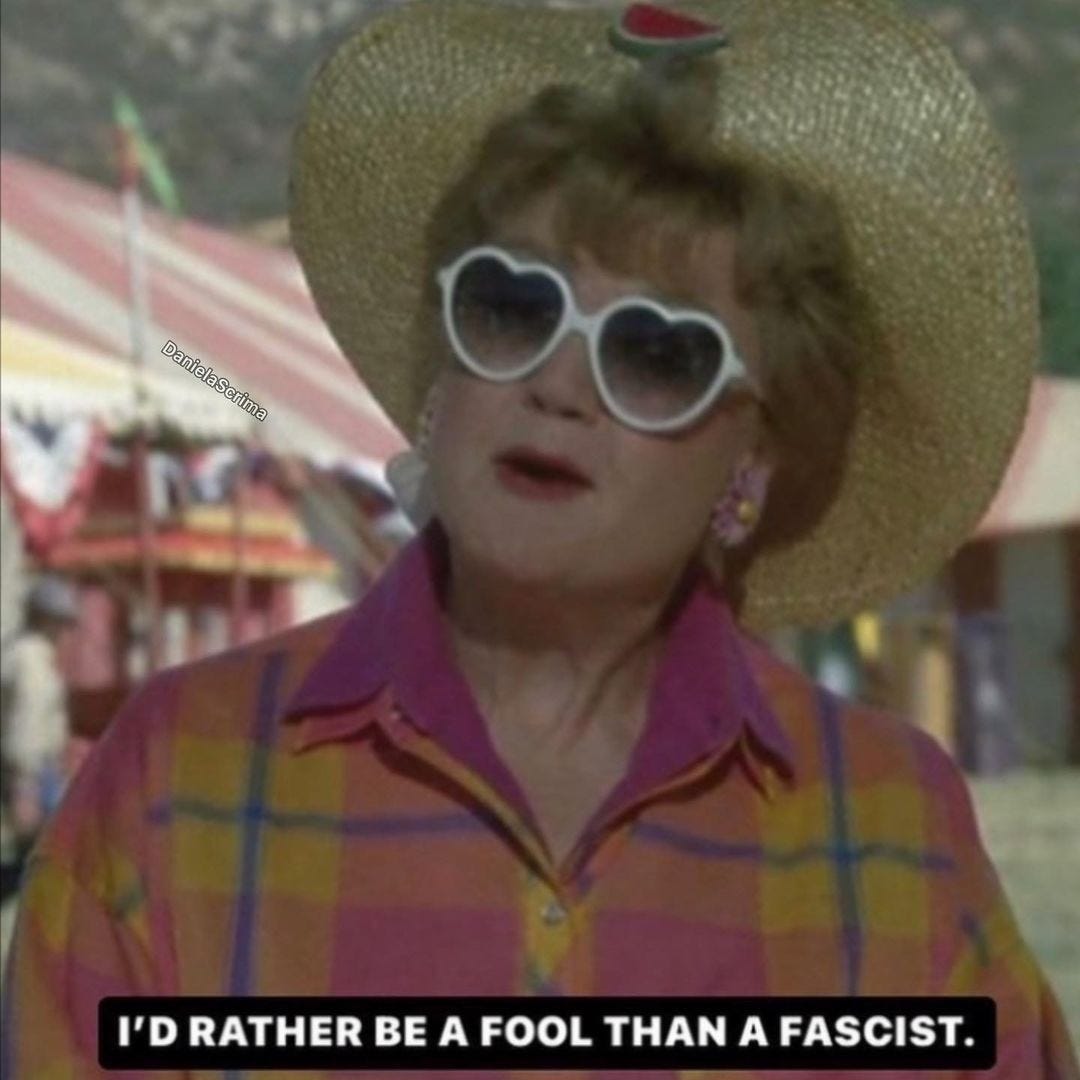
And for us, the moment has passed.
The moment has passed for “I didn’t know” and “I’m not political,” especially from the highest levels of comfort, privilege and safety. It’s always been too late for that, but right now it feels obscene.
Silence is a moral declaration too. Dr. King called it betrayal. It feels like that’s where we are now.
It tells the truth about what we’re willing to tolerate, what kind of chaos we’re willing to live in, what kind of reality we’re willing to hand our kids and grandkids—and who we’re willing to leave behind.
Even if you think all this doesn’t touch your house today, it’s shaping the lives of people you love.
My kids know exactly where their parents stand in these moments. They ask about their family and friends. It feels personal to them because it is personal. We’re all making quiet judgments about who is safe.
It’s okay to change your mind. We LOVE and respect a lifelong learner over here. The very best time to do that was 2016. The second best time is right now.
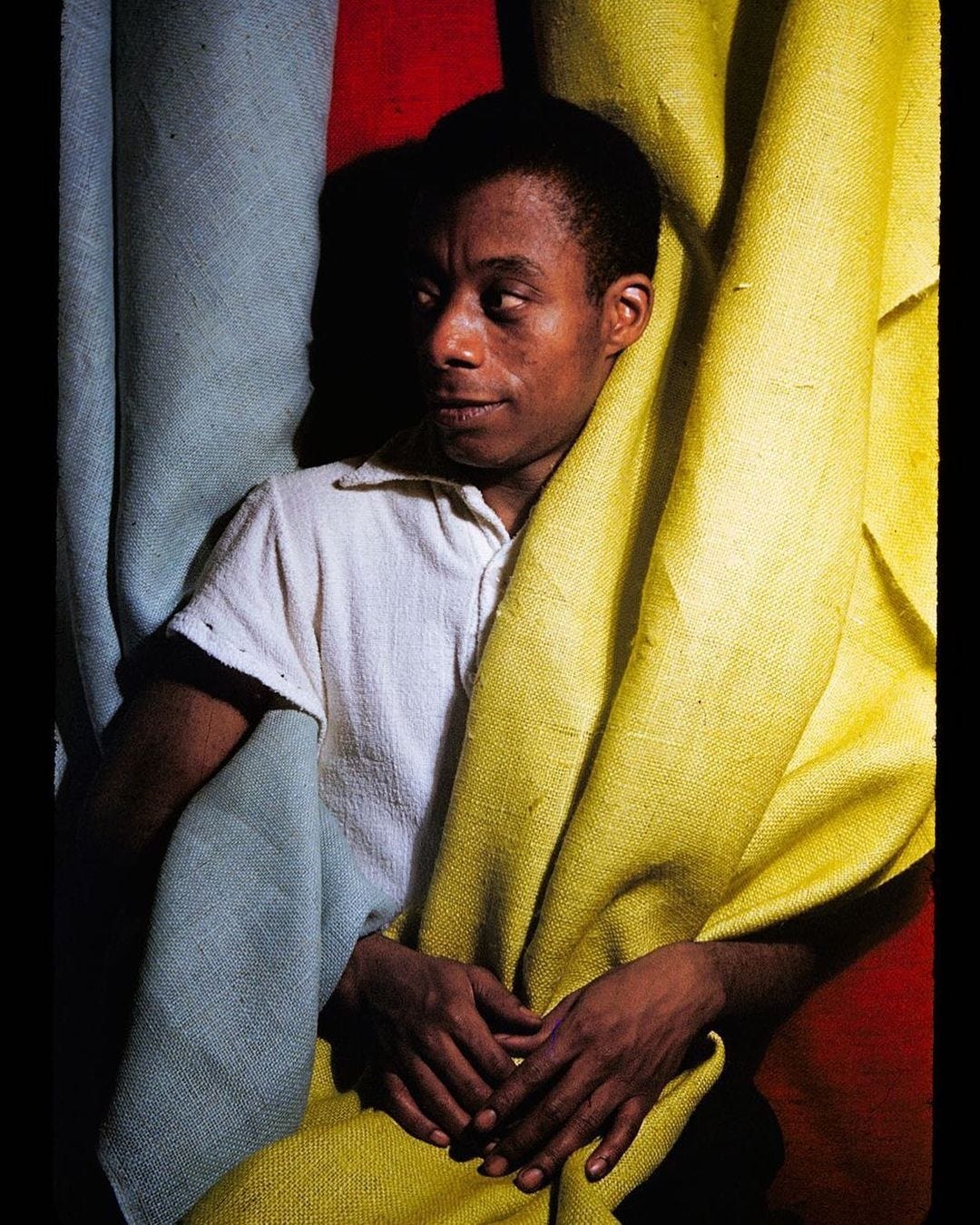
James Baldwin has this line that always gives me shivers:
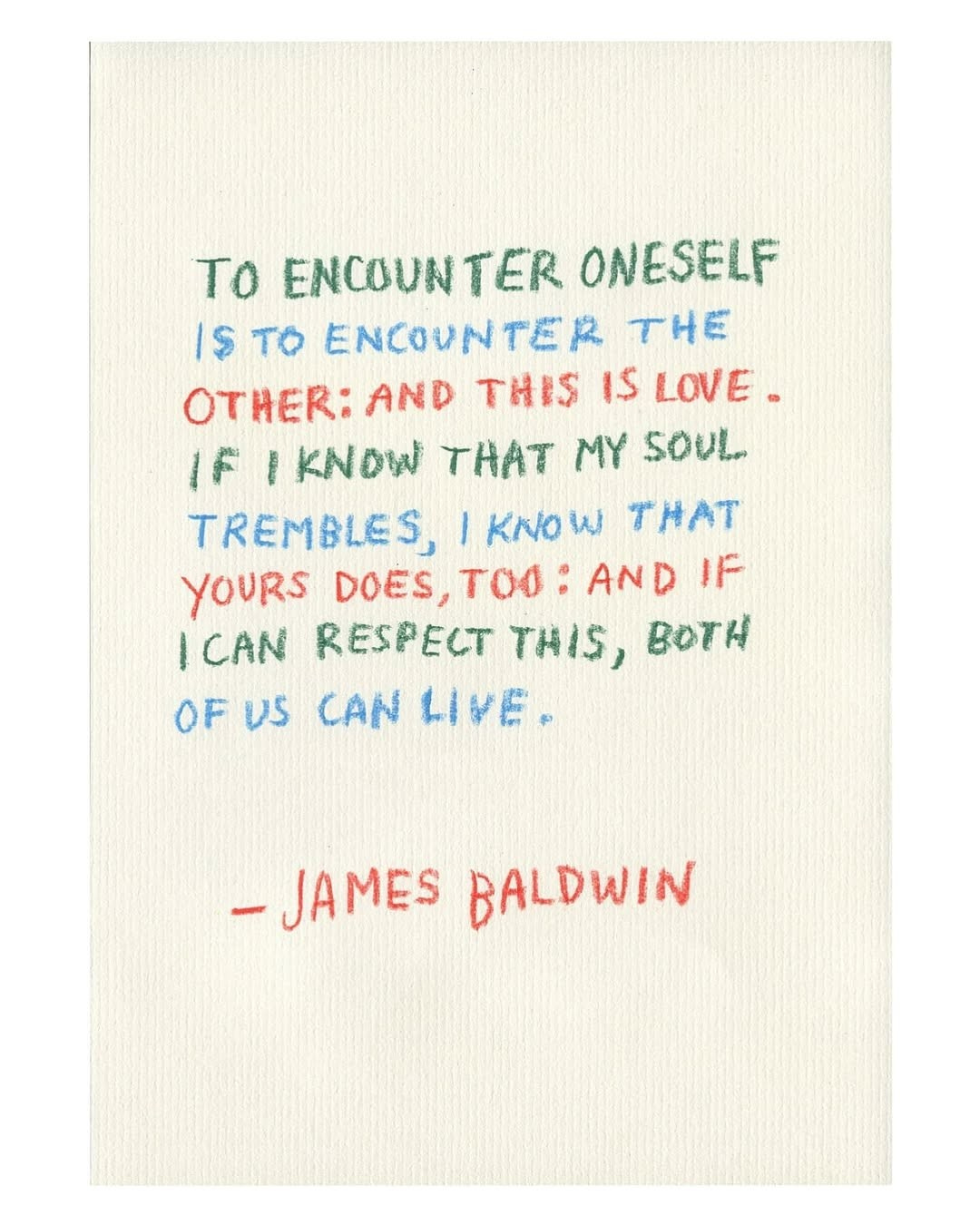
“The sea rises, the light fails, lovers cling to each other, and children cling to us. The moment we cease to hold each other, the moment we break faith with one another, the sea engulfs us and the light goes out.”
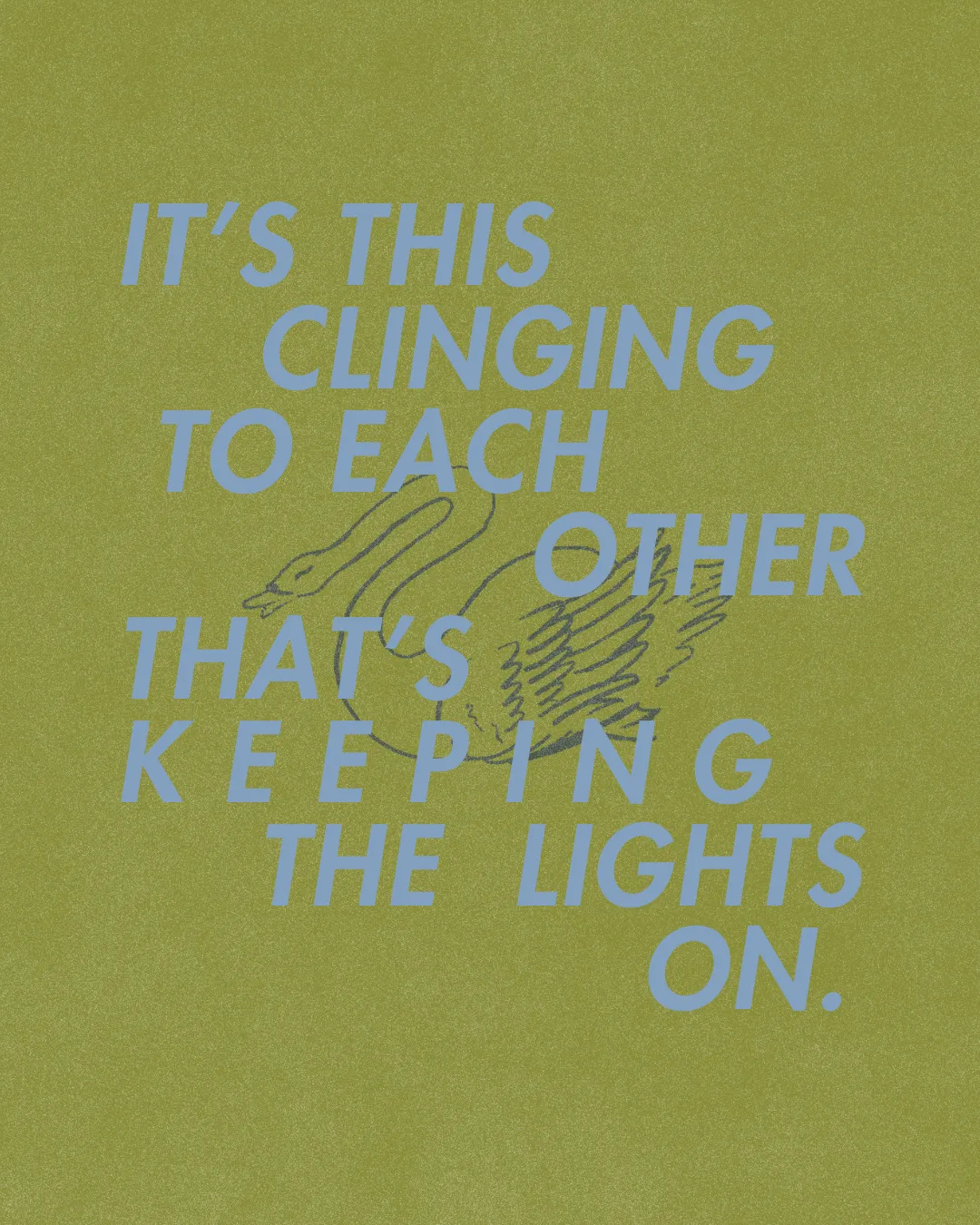
It’s that clinging to each other that’s keeping the lights on. And god, I’m worried that if we don’t do it now, the lights could go out.
When we argue about things like I.C.E., we’re almost never just arguing about “policy.” We’re arguing about legitimacy and reality.
I keep coming back to something Van Jones said: Conservatives see law enforcement under attack. Progressives see unchecked federal power running roughshod over neighborhoods. Same events, totally different data sets, totally different movies playing in our heads. Algorithms are literally feeding us different videos, headlines and emotional cues. Of course it feels like we’re living in alternate universes.
But here’s the part that makes me fiery: at some point, it is your moral obligation to go get better, more well-rounded information. Especially when the footage is right there.
If you need somewhere to start, Sharon McMahon (@sharonsaysso) is a good source. Her updates are nonpartisan, deeply informed, and relentlessly human-centric. She’s one of the people helping us see the whole picture without turning away from the hard parts.
Because the video of yesterday’s murder is absolutely horrifying. If you are only listening to what Fox News and this administration are telling you about what happened, you are absolutely part of the problem. You have to let your own eyes and ears do some work.
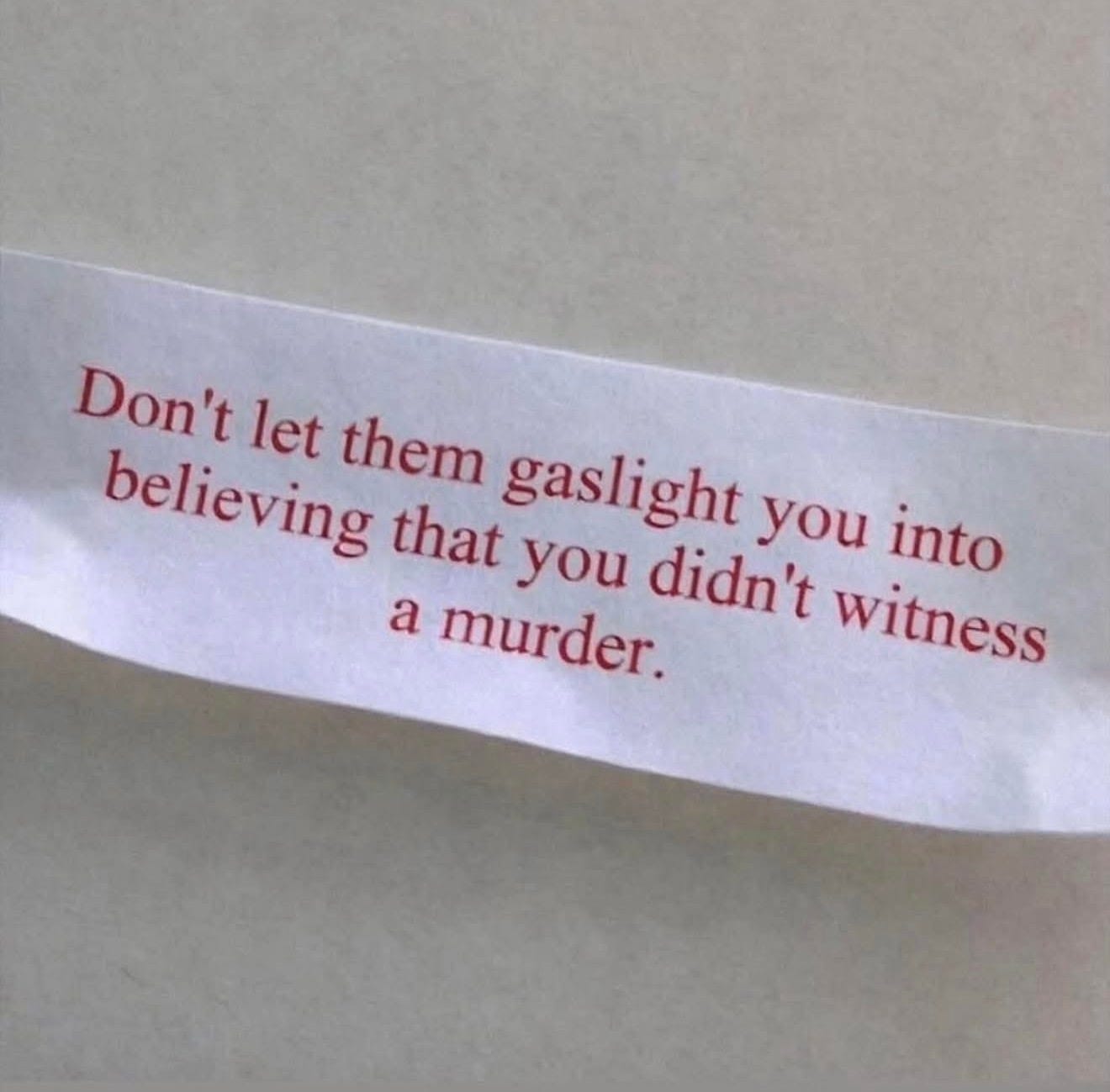
Watch the tenderness of this ICU nurse—this man giving a final salute to a veteran in his care. Watch him lawfully filming, putting his own body between agents and two women who are being pepper sprayed at point-blank range. What happens from there is not up for debate. We can see it from every angle.
And please, before you say a damn thing about him or what you think you know about the gun that was on his person: the Venn diagram of people who insist we can’t do anything about school shootings because of the Second Amendment and the right to bear arms to protect us from a tyrannical government and the people who’ve joined or support ICE enforcing the will of a tyrannical government and killing a man who was lawfully carrying a concealed weapon on his body in Minneapolis while filming ICE is a complete circle.
You don’t have to agree with every chant in the street to admit what you’re seeing is wrong. You just have to get curious and be willing to let your heart break, like people’s lives depend on it — because they do.

Baldwin also wrote (I’m paraphrasing here) that when a society allows one group of people to be menaced or destroyed, no one is actually safe. The violence we tolerate against some people eventually turns on the whole house. And because we’re so desperate to cling to whatever comfort, privilege or status we think we have, we convince ourselves the lie is safer than the truth.
He calls us, basically, a loveless nation—with a few people still struggling to keep their hearts alive.
I want to be one of the strugglers. I want my kids to know we at least tried to keep our hearts from going numb.
I once went to Café de Flore in Paris mostly because James Baldwin used to write there and I wanted to feel close to his process, his words, his ghost and I’m having that same urge today. He helps keep me soft.
Here’s the invitation we’ve really got to keep circling back to:
Sit with the ache and the nuance. The uncertainty. The pain you see in someone else. Notice the little jolt in your chest when something doesn’t fit your neat story about the world. Don’t rush past it. Go one layer deeper.
We’re always making assumptions about people. It’s how our brains make things manageable. But when something doesn’t fit, it feels out of our control—and we hate that.
So we try to manage it.
Fix it.
Punish it for making us uncomfortable.
Or ignore it completely.
But this moment—and honestly every moment of conflict—asks us to turn toward each other instead of pulling away. To regulate instead of react (which is an insanely heavy lift, especially if your nervous system is already fried).
Not standing beside your neighbor is standing for something dark and dehumanizing and anti-democratic.
This is not partisan.
It would take sixteen Senate Republicans to vote non-partisan to end what’s happening in Minneapolis. It would take twenty-three to impeach and remove Trump from office. All of us should be flooding the lines of our reps—Senate and House—reminding them who they work for and what we need from them right now.
There’s a version of beauty I really care about, and I reach for it hard in moments like this because it’s one of the only things that feels anchoring. It’s not soft-focus or twee. It’s something sturdier—a daily attentiveness, a way of staying tethered to what matters.
Noticing.
Doing the work that makes life more livable—for ourselves and each other.
Noticing beauty is its own kind of resistance. Responding to its absence? That’s community care.
Some of the most beautiful things I’ve ever seen are the least tangible:
Filling out Medicaid paperwork for an aging parent. Walking a friend through cancer. Trying to get therapies covered. Learning the language of our kids’ big feelings. Figuring out our own limits and honoring them with some gentleness—because that tenderness begets more tenderness.
The work of care doesn’t end at the threshold of our homes. Holding it with love may be our greatest act—but we can also carry that love forward. Into policy, into public life, into the kind of future we want to belong to.
Tender things still happen, but they only exist if we keep choosing them together—at kitchen tables, in voting booths, in the streets, on the phone with a staffer.
“If the drink is bitter, turn yourself to wine.”
– Rainer Maria Rilke, Let This Darkness Be a Bell Tower
I’ve been turning that line over and over in my head for weeks.
My meaning-making brain is always hunting for clarity, and when I can’t find it, this line feels like a kind of comfort. Or action. Or love. I’m not totally sure yet.
Defiant sincerity feels like a bell tower to me right now.
Maybe it looks like remembering that one of the most tender, sacred things we can do is simple and impossible at the same time:
Turn toward one another. Keep walking each other home.
Keep making art and meaning and beauty.
Keep making lunches and love and small good things in the white-hot center of all this ick.
Maybe turning myself to wine just means letting what hurts move through me and become something shareable instead of something that hardens me—staying soft when it would be so much easier to go sharp.
If the drink is bitter, I’m trying to keep pouring what I can.
I’ve spent the last year and a half really doubling down on my deepest hope for myself and my family: to feel safe, grounded, belonging in the lives we’re building.
To feel at home in it.
But I’m not an island. My sense of home, my well-being—and yours—are tied to each other.
In moments like this, I’m drawn to John Keats’ idea of negative capability—the ability to remain “in uncertainties, mysteries, doubts, without any irritable reaching after fact and reason.” Especially now, as we’re watching this insane attack on democracy from people who were supposedly there to preserve it, maybe our resistance is to keep making something meaningful anyway.
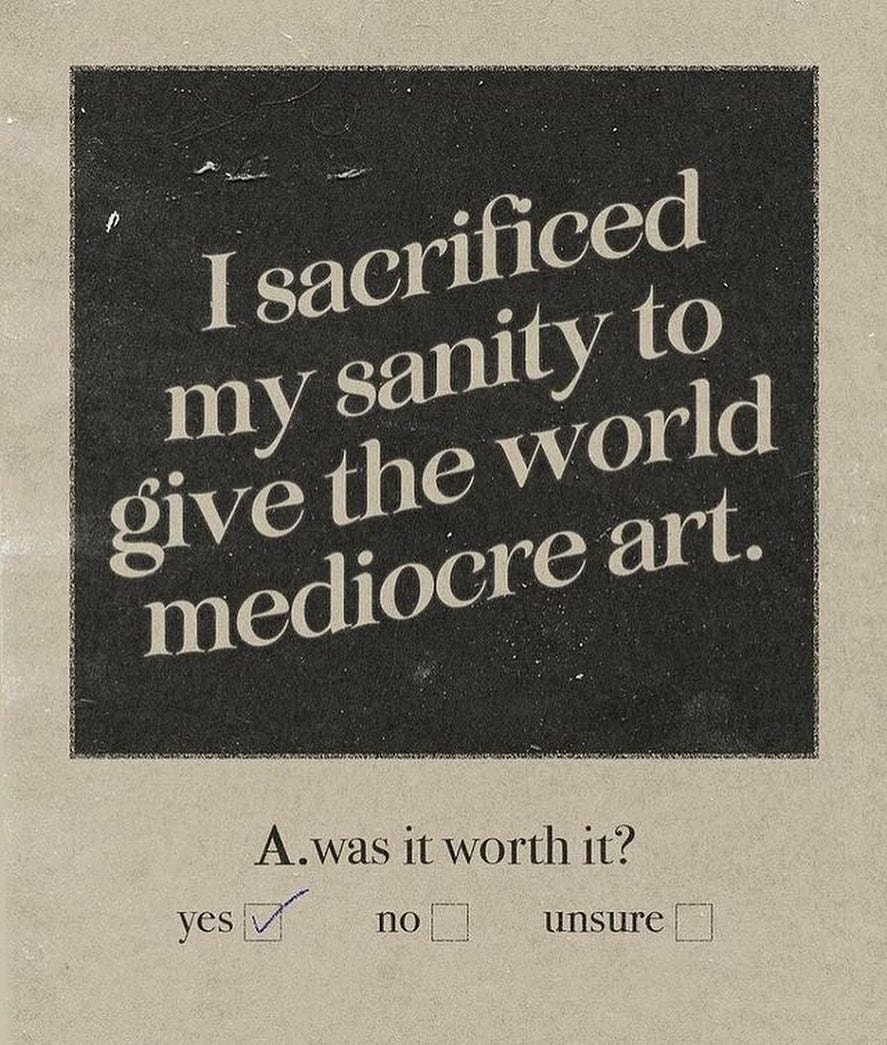
Maybe we give ourselves permission to sit with the ache, to let our art hold space for what’s unresolved and breaking us open. Creativity doesn’t always have to fix things. Sometimes it’s enough that it holds them without looking away.
So today, I’m trying to embrace the fog, the ache, the questions. Maybe the act of sitting with the brokenness in ourselves and each other is the art.
And maybe the people who are still making things—writing jokes, sharing outfits, painting in their tiny studio apartments—are not being frivolous. If they are holding both the horrors and the craft, they’re revolutionaries.
If you want a small practice that might help:
Naikan, which means “inner looking” in Japanese, began as a quiet self-reflection practice in Buddhist temples. It invites three simple questions:
What have I received?
What have I given?
Where have I caused difficulty?
That’s it.
But if you sit with them, they start to open things up. You begin to see all the small kindnesses that have held you up, the ways you’ve contributed and the places where you’ve added to someone’s burden. It’s humbling and grounding at the same time.
Naikan reminds me that our lives are braided together—that each action, even the tiny ones, becomes part of someone else’s story.
Sincerity has a grounding force, a kind of gravity. When we create, when we share what’s close to the heart—even if it’s small, even if it trembles as we offer it—there’s something powerful in that.
If you’re holding a lot right now, same. You’re not alone in it. Let’s keep walking each other home, as tenderly and as fiercely as we can.
hey, I love you, bye.
Jessica
Every word. You made me weep with this. Thank you for giving language to things especially to the things most tender.
Thank you for walking me home with these words. Holding the tension of everyday life when everything is on fire feels unbearable. Thank you for doing it anyway. It’s so important.